Flood cleanup in Raleigh, NC
Flood cleanup in Raleigh treats creek and street water as contaminated: it carries sewage and silt. Keep children and pets out, pull wet carpet and pad, cut drywall above the water line, then clean, disinfect and dry. Rain blown in through a wall or window is a cleaner job, but it still needs drying within a day or two.
The call is connected with an independent local company. Water category here: category 3 (contaminated) for creek and street water; category 2 for rain through a wall or roof.
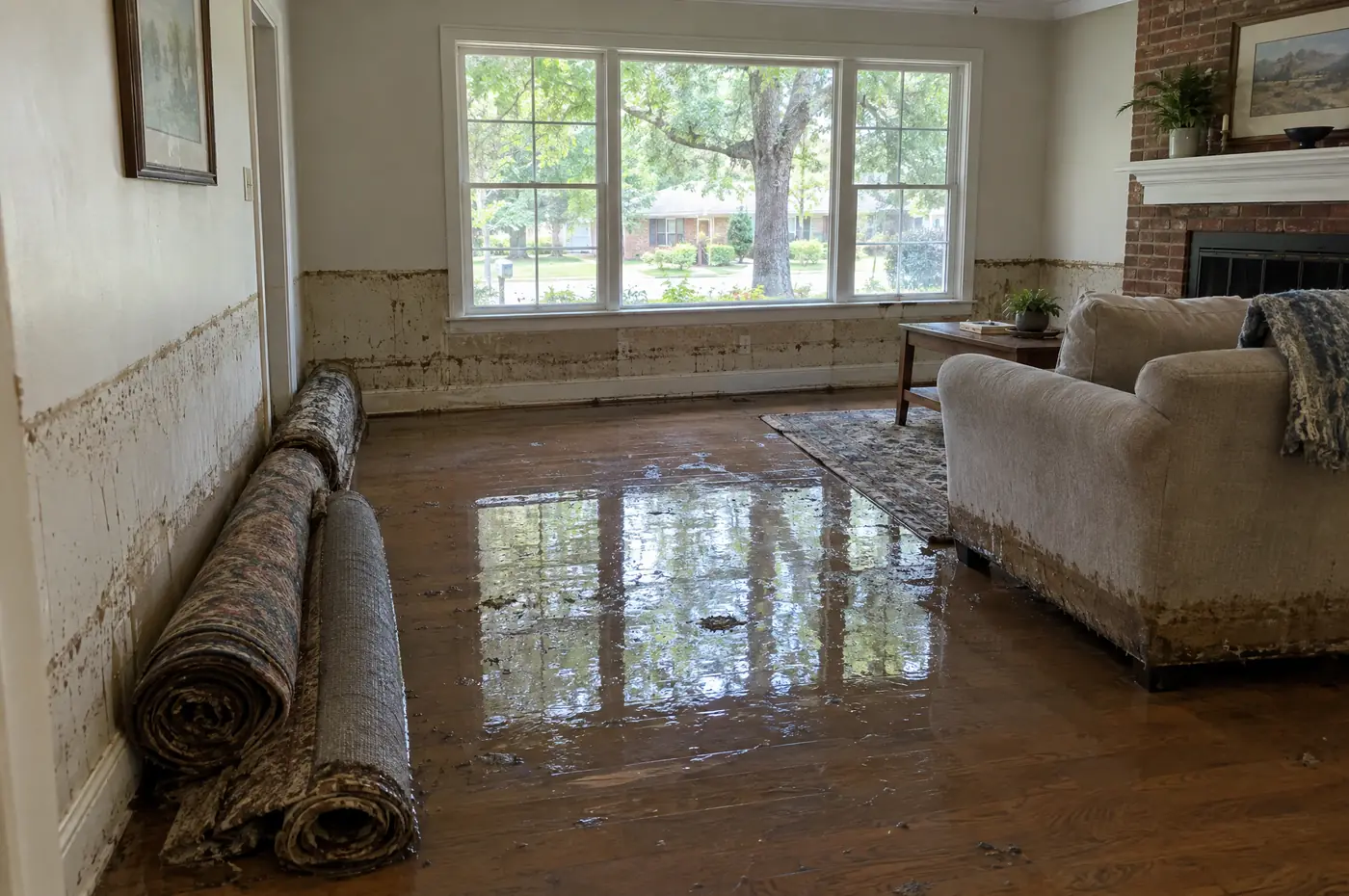
Illustrative photo.
Crabtree Creek has done this before. Hurricane Fran in 1996 took it to 23.1 feet at the Anderson Drive gauge, and Hurricane Matthew in 2016 to 21.3 feet. The National Weather Service says water reaches the basements of the low-lying creek-side homes on Claremont Drive at 16 feet.
Right now
- 1Stay out of moving water and away from any water that could reach outlets or the electrical panel.
- 2If it is safe, turn off power to the flooded rooms at the breaker from a dry spot.
- 3Keep children and pets away from creek or street water. Wear boots and gloves if you have to walk through it.
- 4Take photos and video of the water level and every wet room before anything is moved, for your records.
- 5Write down when the water came in and when it went down; the drying plan depends on how long it sat.
Raleigh facts for this problem
At 16 feet on the Crabtree Creek gauge at Anderson Drive, the National Weather Service says water reaches the basements of the low-lying creek-side homes on Claremont Drive.
Source: NWS National Water Prediction Service: Crabtree Creek at Anderson Drive (ADRN7).
Crabtree Creek crested at 23.1 feet at Anderson Drive on September 6, 1996 (Hurricane Fran) and at 21.3 feet on October 8, 2016 (Hurricane Matthew).
Source: NWS National Water Prediction Service: Crabtree Creek at Anderson Drive (ADRN7).
FEMA records 1,259 NFIP flood claims in Raleigh's 15 home ZIP codes, with $26,122,645 paid on buildings and contents.
Source: FEMA OpenFEMA NFIP Redacted Claims v3, calculated by Raleigh Water Damage NC on November 13, 2026.
Claims with a 1996 date of loss, the year of Hurricane Fran, number 336 in those ZIP codes, with $7,755,079 paid.
Source: FEMA OpenFEMA NFIP Redacted Claims v3, calculated by Raleigh Water Damage NC on November 13, 2026.
The City of Raleigh says its residents get a 25 percent lower premium on flood insurance policies.
Raleigh's Floodplain Team answers flood zone questions at 919-996-3777 and floodplain@raleighnc.gov.
Homeowners policies do not cover flood or rising water, according to the NC Department of Insurance.
Source: NC Department of Insurance: FAQs About Homeowners Insurance.
Raleigh's Floodplain Team at 919-996-3777 answers flood zone and flood insurance questions, and the city's Flood Information Portal shows the flood risk for a single address. The city says residents get a 25 percent lower premium on flood insurance policies.
Sources: City of Raleigh: Know Your Flood Risks; City of Raleigh Flood Information Portal; City of Raleigh: Hurricane Season Starts June 1
See Raleigh's flooding history and Crabtree Creek crests, or open the water damage estimator with this problem filled in.
What the work usually looks like, day by day
Use it to follow along when a company walks you through the job. Every house is different.
- First visit1. Pump and extractStanding water and mud are pumped out, and wet carpet, pad and anything soaked through are removed.
- Day 12. Flood cutDrywall is cut above the water line, often 2 feet or more, because flood water wicks up and carries contamination with it.
- Days 1 to 23. Clean and disinfectStuds, slab and subfloor are cleaned and treated before drying starts, so mold and bacteria are not sealed in.
- Days 2 to 64. Dry the structureDehumidifiers and air movers run until framing and subfloor read dry. The crawl space under the house gets the same treatment.
- Last day5. Dry readings in writingFinal readings are logged before rebuilding. Ask for the moisture log; rebuilding is separate work.
How insurance usually treats it
The NC Department of Insurance says homeowners policies do not cover flood or rising water; that takes a separate flood policy, usually through the National Flood Insurance Program. Wind-driven rain through a damaged roof or wall is treated differently from flood water. Your policies decide, so read them or ask your agent before work starts.
General information, not insurance advice; your policy decides. North Carolina's claim rules are in water damage insurance in North Carolina.
What changes the size of the job
- How deep the water rose and how long it stood
- Creek or street water (contaminated) versus rain through a wall
- How high the drywall has to be cut
- Flooring type: carpet and pad usually go; hardwood may or may not be saved
- Whether the crawl space and ductwork under the floor took water
Prices are not quoted here: the company that comes out measures the moisture, then writes an itemized estimate.
Questions Raleigh homeowners ask
Does homeowners insurance cover flood cleanup in Raleigh?
Not for flood or rising water, according to the NC Department of Insurance. That takes a separate flood policy, usually through the National Flood Insurance Program. The City of Raleigh says its residents get a 25 percent lower premium on flood insurance policies.
How do I find out if my Raleigh home is in a flood zone?
The City of Raleigh's Flood Information Portal shows flood risk for a single address, and the city's Floodplain Team answers questions at 919-996-3777 or floodplain@raleighnc.gov.
How high does Crabtree Creek have to get before homes flood?
At the Anderson Drive gauge, the National Weather Service says water reaches the basements of the low-lying creek-side homes on Claremont Drive at 16 feet, and floods the lower homes there at 20 feet. Our rain totals page shows the gauge's current level.
Can I clean up flood water myself?
Small amounts of rain water on a hard floor, yes, if it is dried within a day or two. Creek or street water carries sewage and silt; the EPA says mold from contaminated water calls for someone experienced with that cleanup, and wet drywall and carpet usually have to come out.
Sources for this page
- NC Department of Insurance: FAQs About Homeowners Insurance
- City of Raleigh: Know Your Flood Risks
- City of Raleigh: Hurricane Season Starts June 1
- City of Raleigh Flood Information Portal
- NWS National Water Prediction Service: Crabtree Creek at Anderson Drive (ADRN7)
- NWS Raleigh: Event Summary, Hurricane Matthew, October 2016
- EPA: Mold Cleanup in Your Home