Mold removal in Raleigh, NC
Mold removal in Raleigh starts with the water feeding it: a slow leak, a wet crawl space or a room that never dried after a storm. A crew contains the area, cuts out what cannot be cleaned, cleans the rest and dries the house before walls close up. North Carolina has no mold license, so the checking falls to you.
The call is connected with an independent local company. Water category here: set by where the water came from.
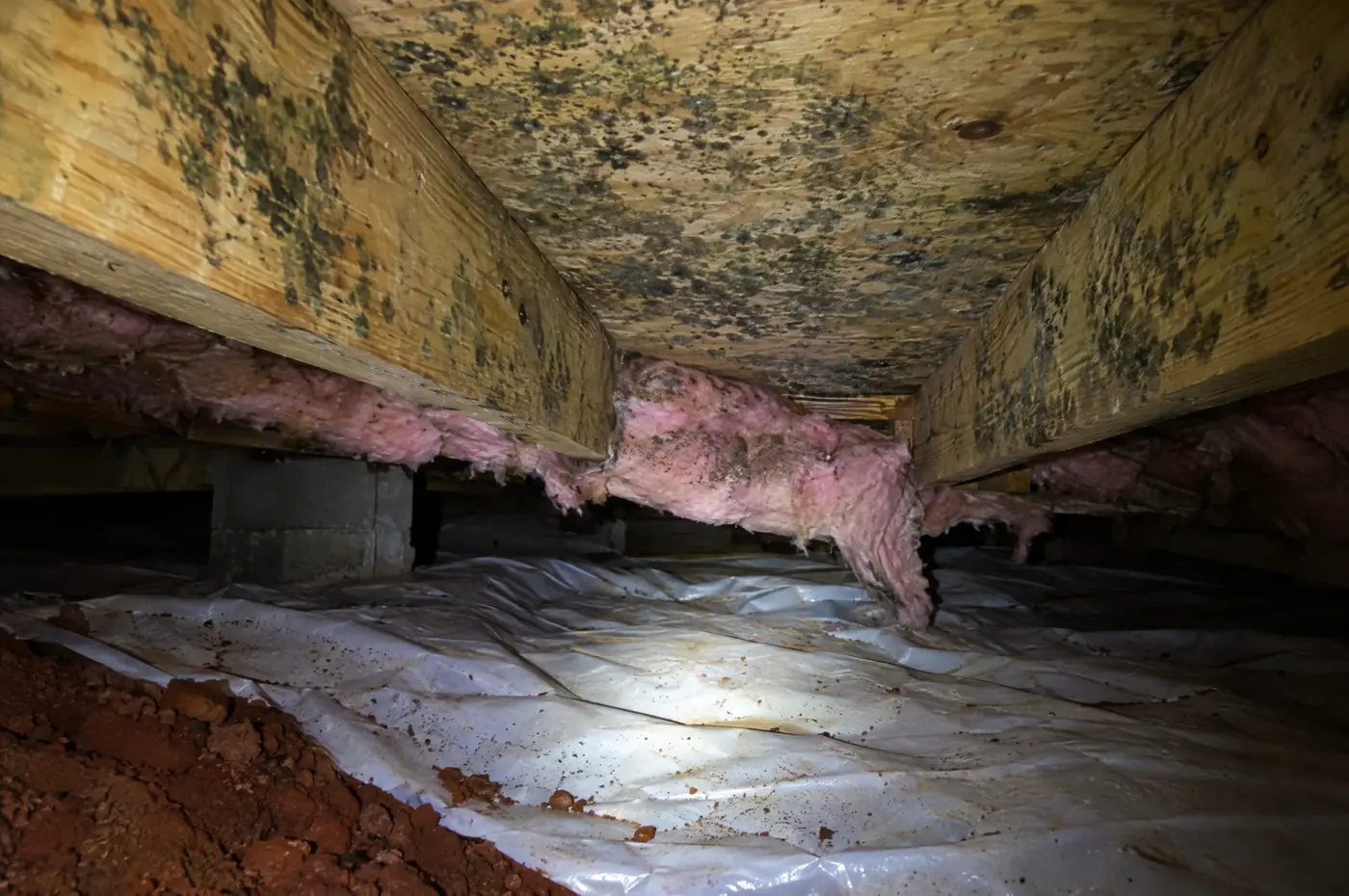
Illustrative photo.
The EPA says a patch smaller than about 10 square feet can usually be cleaned by the homeowner, and that larger growth, mold after heavy water damage, or mold left by sewage calls for someone experienced with that work. Its advice is to dry wet materials within 24 to 48 hours and keep indoor humidity under 60 percent.
Right now
- 1Stop the water first. Growth keeps returning while the moisture behind it is still there.
- 2Close the door to the room and leave the mold alone. Scraping it or using a household vacuum spreads spores to clean rooms.
- 3If the growth is near a return vent or the air handler, ask before running the heat pump hard; moving air carries spores.
- 4Do not paint over stains or seal them with caulk. It hides the problem from the next person who looks.
- 5Take dated photos for your records and write down when you first noticed the smell or the water.
Raleigh facts for this problem
No federal or state certification program exists for companies or individuals that do mold remediation, according to NC State Extension.
A general contractor needs a North Carolina license once a project is valued at $40,000 or more.
The EPA's advice is to dry water-damaged areas and items within 24 to 48 hours so mold does not get started.
The EPA asks homeowners to hold indoor humidity under 60 percent, and 30 to 50 percent is the range it prefers.
July, August and September bring 14.88 in. of Raleigh's normal 46.07 in. of yearly rain (1991-2020 normals), and September is the wettest month at 5.15 in.
Source: NCEI 1991-2020 normals via ACIS, Raleigh Area record, calculated by Raleigh Water Damage NC on November 13, 2026.
About 23% of homes in Raleigh's 15 home ZIP codes were built before 1980, by Census estimates for ACS 5-year 2020-2024.
Source: U.S. Census Bureau, ACS 5-year, tables B25034 and B25035, calculated by Raleigh Water Damage NC on November 13, 2026.
ZIP 27608 has the oldest housing of the 15, with a median year built of 1970; ZIP 27617's median is 2006.
Source: U.S. Census Bureau, ACS 5-year, tables B25034 and B25035, calculated by Raleigh Water Damage NC on November 13, 2026.
North Carolina does not license mold remediation, according to NC State Extension, so a Raleigh mold crew has no state mold license to show you. If the job grows into rebuilding worth $40,000 or more, the company needs a general contractor license, which you can check on the NCLBGC search. The EPA's indoor humidity target is under 60 percent; the rain totals page shows today's dew point at the airport.
Sources: NC State Extension: Mold Remediation Professionals; NC Licensing Board for General Contractors; EPA: A Brief Guide to Mold, Moisture and Your Home
See how old the homes are in each Raleigh ZIP, or open the water damage estimator.
What the work usually looks like, day by day
Use it to follow along when a company walks you through the job. Every house is different.
- First visit1. Find the moistureMoisture meters, and often a thermal camera, show where the water is now. Drywall and joists can read wet while looking dry.
- First visit2. Seal off the areaPlastic sheeting and an air scrubber that pulls air out of the work area keep dust and spores from drifting into other rooms.
- Days 1 to 23. Remove and cleanMoldy drywall, insulation and carpet pad come out in bags. Framing, joists and other solid wood are cleaned, and sometimes sanded.
- Days 2 to 54. Dry it outDehumidifiers run until the wood reads dry. In July and August that can take longer than the removal did.
- Last day5. Readings before closingMoisture readings are taken again before new drywall or insulation goes in. Ask for a copy. If you want clearance testing, hire a separate tester.
North Carolina's rule on mold work
North Carolina has no state license or certification for mold remediation: NC State Extension says no federal or state certification program exists for companies or people who do it. A general contractor still needs a state license from the NC Licensing Board for General Contractors when a project is valued at $40,000 or more, so ask for that number on large jobs.
Sources: NC State Extension: Mold Remediation Professionals; NCLBGC license search. More in the contractor and mold license guide.
How insurance usually treats it
Many homeowners policies cap mold at a small sub-limit or exclude it, while the sudden leak that caused it may be handled differently. The declarations page and any mold endorsement say which applies to you. Read them, or ask your agent, before work starts so the estimate and the paperwork describe the same job.
General information, not insurance advice; your policy decides. North Carolina's claim rules are in water damage insurance in North Carolina.
What changes the size of the job
- How many square feet have growth, and whether it is past the EPA's 10 square foot line
- Where it is: open wall, crawl space joists, attic sheathing, or inside ductwork
- How much drywall, insulation and subfloor has to come out
- Containment and air filtration while the work is going on
- How long the drying takes once the moldy material is out
Prices are not quoted here: the company that comes out measures the moisture, then writes an itemized estimate.
Questions Raleigh homeowners ask
Does North Carolina license mold remediation companies?
No. NC State Extension says no federal or state certification program exists for companies or individuals who provide mold remediation. If the work grows into a project valued at $40,000 or more, the company needs a North Carolina general contractor license, which you can check on the NCLBGC search.
Is mold abatement the same as mold remediation in Raleigh?
People use the words for the same job: containing the area, removing moldy materials, cleaning what stays and drying the structure. What matters more than the word is the written scope. Ask what will be removed, how the area will be sealed off, and how dryness will be measured before anything is closed up.
How much does mold removal cost in Raleigh?
We do not quote prices, and we found no Raleigh price source we could check. The size of the job depends on the square footage of growth, whether it is in a wall, crawl space or attic, and how much has to come out. The estimator shows the line items a written estimate should list.
Can I clean small mold spots myself?
The EPA says areas smaller than about 10 square feet can often be handled by the homeowner, with gloves, goggles and a mask, and the water problem fixed first. If the mold came from sewage or flood water, the EPA points to a professional who has handled that kind of cleanup.